Mobile App Development
Mobile App Development for iOS & Android
moblers designs, builds, and ships production-grade mobile apps for iOS and Android — from the first wireframe to a live listing on the App Store and Google Play. Backed by 18+ years of delivery and 150M+ installs.
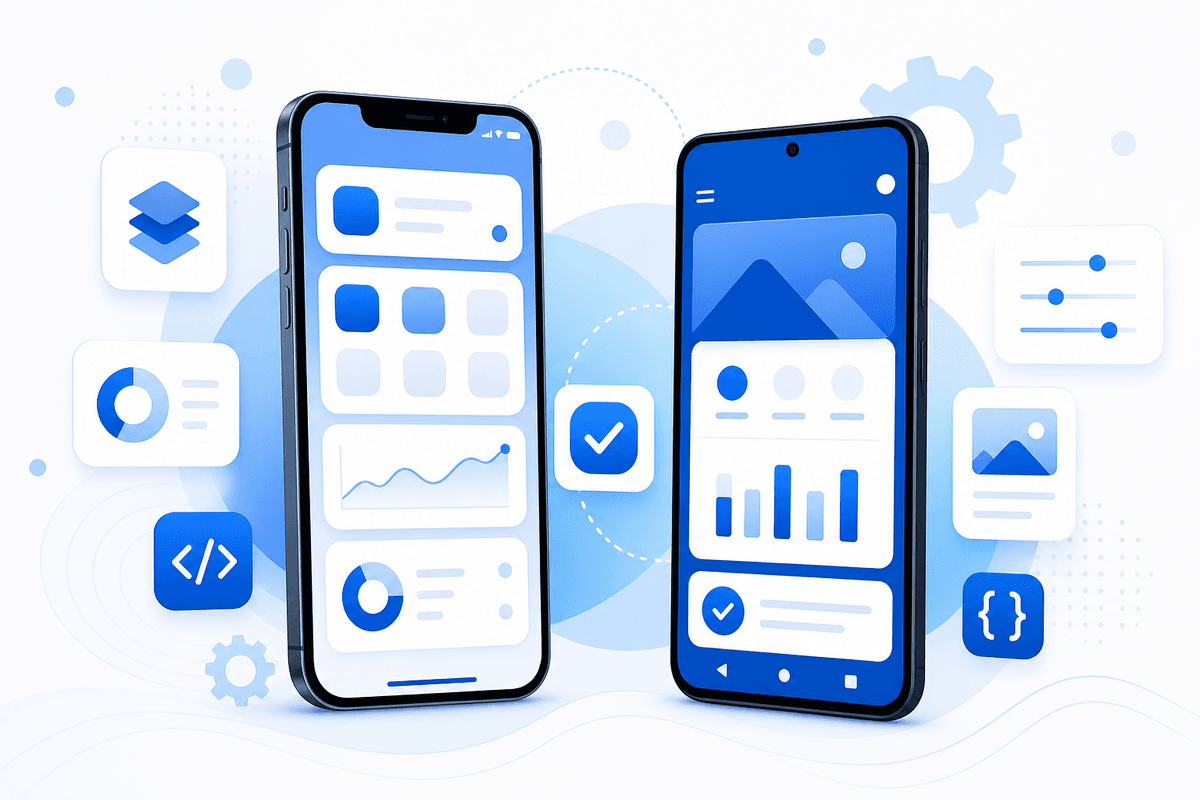
A great mobile app is more than a screen full of features — it is a fast, reliable product that people trust with their data and return to every day. moblers is a full-lifecycle mobile app development studio: we handle product strategy, UX/UI design, native and cross-platform engineering, quality assurance, store submission, and long-term maintenance under one roof.
We have shipped consumer apps, enterprise apps, IoT-connected apps, and AI-powered experiences for startups and Fortune 500 companies alike — and clients own 100% of the source code we deliver.
What we build
End-to-end mobile products, not prototypes.
Native iOS (Swift)
High-performance iPhone and iPad apps built in Swift/SwiftUI, tuned for the latest iOS releases and App Store guidelines.
Native Android (Kotlin)
Robust Android apps in Kotlin, optimized across devices, form factors, and Google Play requirements.
Cross-platform (Flutter / React Native)
One codebase, both platforms — ideal when speed to market and a shared roadmap matter most.
Backend & APIs
Secure authentication, scalable cloud backends, real-time sync, payments, and third-party integrations.
Native or cross-platform? We help you choose
The right architecture depends on your product, budget, and roadmap. Native (Swift, Kotlin) delivers the best performance and access to platform-specific capabilities. Cross-platform (Flutter, React Native) can cut time and cost when you need both platforms from a single team.
We make this decision with you based on evidence — expected user base, performance needs, hardware features, and how fast you need to reach the market — rather than defaulting to one stack.
Our delivery process
- Discovery & product strategy — goals, users, scope, and a clear MVP definition.
- UX/UI design — wireframes, prototypes, and a polished, on-brand interface.
- Agile development — regular demos, transparent progress, and tight feedback loops.
- Quality assurance — manual and automated testing across real devices.
- Launch — App Store and Google Play submission, review handling, and release.
- Support & scale — monitoring, maintenance, and iteration after launch.
How we team with you
We assemble the roles needed for the agreed scope rather than imposing one fixed team size. Mobile engagements are senior-led, and named roles, allocation and availability are confirmed in the proposal.
Focused MVP or scoped project
A defined mobile outcome delivered by the required mix of product management, UX/UI, mobile engineering, backend engineering, QA and shared release support.
Dedicated product team
A committed multidisciplinary team for an ongoing roadmap, typically combining product or project management, platform or cross-platform engineers, backend, QA, design and delivery support as needed.
Team augmentation
Experienced iOS, Android, Flutter, React Native, backend, QA or product specialists embedded into an existing client team, with professional supervision from moblers.
Maintenance and scale
A continuing team for monitoring, defect resolution, OS and store compatibility, release support, feature iteration and product growth.
Pricing and commercial models
Mobile development is quoted after discovery against the chosen platforms, scope, integrations, quality requirements, timeline and risk. We do not publish universal mobile-app budget bands, hourly rates, deposits or milestone terms because they are not approved as standard commercial promises.
Scoped delivery
A proposal can define a bounded MVP or release with explicit deliverables, assumptions, exclusions, acceptance criteria, timeline and price.
Dedicated or augmented team
For an evolving roadmap, the proposal can define a monthly team model and role allocations. Published development-team examples are available on our Software Development page; mobile composition and pricing remain project-specific.
Commercial terms
Billing cadence, payment schedule, deposits, change orders, minimum commitment and third-party software, app-store, cloud or infrastructure costs are documented in the signed proposal and services agreement.
Security, privacy and compliance
Security and privacy requirements are identified during discovery and locked with the project scope. We publish delivery controls—not unsupported blanket certification claims.
- Human-led architecture and security review, mandatory senior peer review, automated CI checks, manual QA and client approval before release.
- OWASP-mapped secure-development practices and testing appropriate to the mobile product and its data flows.
- Required encryption, key management, authentication, authorization, least privilege, residency, retention and deletion controls are designed and documented per engagement.
- Compliance evidence, penetration testing, third-party audits, incident-response obligations, DPA, BAA, NDA and security-addendum terms are confirmed in the proposal when required.
- moblers does not publish organization-wide claims for specific TLS or at-rest algorithms, SOC 2, ISO 27001, HIPAA or PCI certification, pentest cadence, notification SLA or a universal subprocessor list.
- Clients receive full ownership of delivered source code, documentation and deployment artifacts, plus App Store and Google Play submission support.
Post-launch support and operations
We offer ongoing maintenance, monitoring and iteration after launch. Support can be provided by a dedicated team, but the operational commitment must match the app’s risk profile and expected user base.
Maintenance scope
Defect resolution, security and dependency updates, OS and device compatibility, performance work, minor enhancements, release preparation and app-store submissions can be included.
Monitoring and response
Availability, application errors, performance signals, escalation paths and incident handling are selected for the deployed architecture. Tools and coverage are documented per engagement.
SLA options
Severity levels, response and escalation targets, support hours or on-call coverage, uptime commitments, maintenance windows, included hours, overages and reporting cadence are formalized during discovery. No single public SLA applies to every app.
Handover or continued growth
We can continue with roadmap delivery or hand over the owned source code, documentation, architecture and deployment materials to your internal team or another partner.
Selected mobile app case studies
Examples of shipped mobile and connected products with publicly documented scope and outcomes.
365Scores — sports platform
A five-month mobile delivery engineered for millions of users, with real-time scores, personalization and notification requirements.
UIA Airlines — online check-in
A web and mobile platform that achieved more than 70% online check-in adoption and reduced counter staffing from 5–6 to 2 agents per flight.
FirmTech TechRing — IoMT
An end-to-end patient app and clinician portal for a connected health wearable; winner of the Global Tech Awards 2024 in Wearable Technology.
Why teams choose moblers
18+ years
Delivering mobile products since the dawn of the smartphone era (founded 2007).
150M+ installs
Apps built by moblers have been installed over 150 million times.
You own the code
Full source-code ownership, scalable architecture, and clean documentation.
AI-accelerated
AI-assisted workflows compress timelines without compromising quality.
Mobile app development FAQ
How long does it take to build a mobile app?
A focused MVP can ship in as little as 30 days using our AI-assisted workflows; larger, feature-rich apps typically take a few months. We define a realistic timeline during discovery, before development starts.
Should I build a native or cross-platform app?
It depends on performance needs, hardware features, budget, and time to market. Native (Swift/Kotlin) is best for maximum performance and platform-specific features; cross-platform (Flutter/React Native) is efficient when you need both platforms quickly. We recommend the right fit during discovery.
Do you publish the app to the App Store and Google Play?
Yes. We handle store submission, review guidelines, and release for both the Apple App Store and Google Play, and we support you through updates.
Who owns the source code?
You do. Clients receive full ownership of the source code along with documentation, scalable architecture, and deployment support.
Do you maintain the app after launch?
Yes. Available scope includes defect resolution, security and dependency updates, OS/device compatibility, performance work, minor enhancements, monitoring, release preparation and app-store submissions. The exact scope, included hours and release cadence are defined in the support agreement.
What engagement models and team composition do you provide?
We provide scoped MVP or project delivery, dedicated product teams, team augmentation, and maintenance or scaling support. Projects can include product/project management, UX/UI, iOS or Android or cross-platform engineers, backend engineers, QA and shared release/DevOps support. Work is senior-led; exact seniority, team size and allocation are confirmed in the proposal.
What security, privacy and compliance practices do you follow?
Published controls include human-led architecture and security review, mandatory senior peer review, automated CI checks, manual QA, OWASP-mapped practices and client approval before release. Encryption, key management, access controls, data residency, testing, incident response, compliance evidence and contractual protections are designed per engagement. We do not claim universal certifications or fixed technical standards that are not documented in the proposal.
What support SLAs and operational guarantees are available?
Formal SLAs can define severity levels, response and escalation times, support hours, monitoring coverage, uptime targets, maintenance windows, included hours and reporting. These are selected during discovery for the app’s risk profile; moblers does not publish one standard response-time or uptime guarantee for every product.
How much does mobile app development cost?
Every mobile project receives a tailored quote after discovery. A scoped proposal can cover a bounded MVP or release; evolving products can use a dedicated or augmented monthly team. We do not publish approved universal mobile budget bands, hourly rates, deposits or milestone terms. Scope, billing, external costs and change-order terms are stated in the signed proposal.
Can I see similar mobile apps and references?
Yes. Public case studies include 365Scores, UIA Airlines, FirmTech TechRing, Playtech, My Partner, Chegg and Stanley Black & Decker IoT, with documented scope and outcomes where disclosure permits.
Ready to build your mobile app?
Tell us about your idea, Figma design, or product vision. We will map the fastest reliable path from concept to a live iOS and Android app.